The RP2040 is Raspberry Pi's first in-house microcontroller: two Arm Cortex-M0+ cores at 133 MHz, 264 KB of SRAM, and programmable I/O (PIO) state machines that build custom peripherals in hardware. It arrived in 2021 on the Raspberry Pi Pico and now powers the Pico family plus third-party boards from Adafruit, Pimoroni and Waveshare; this page is the chip-level home for our RP2040 projects, with the specs and builds below.
Specifications
C P U
Dual-core Arm Cortex-M0+, up to 133 MHz
Memory
264 KB on-chip SRAM in six independent banks
Flash
None on chip; up to 16 MB external QSPI, execute-in-place
G P I O
30 GPIO pins, 4 usable as 12-bit analogue inputs
P I O
2 blocks, 8 state machines total, for custom peripherals
U S B
USB 1.1 host and device; UF2 drag-and-drop programming
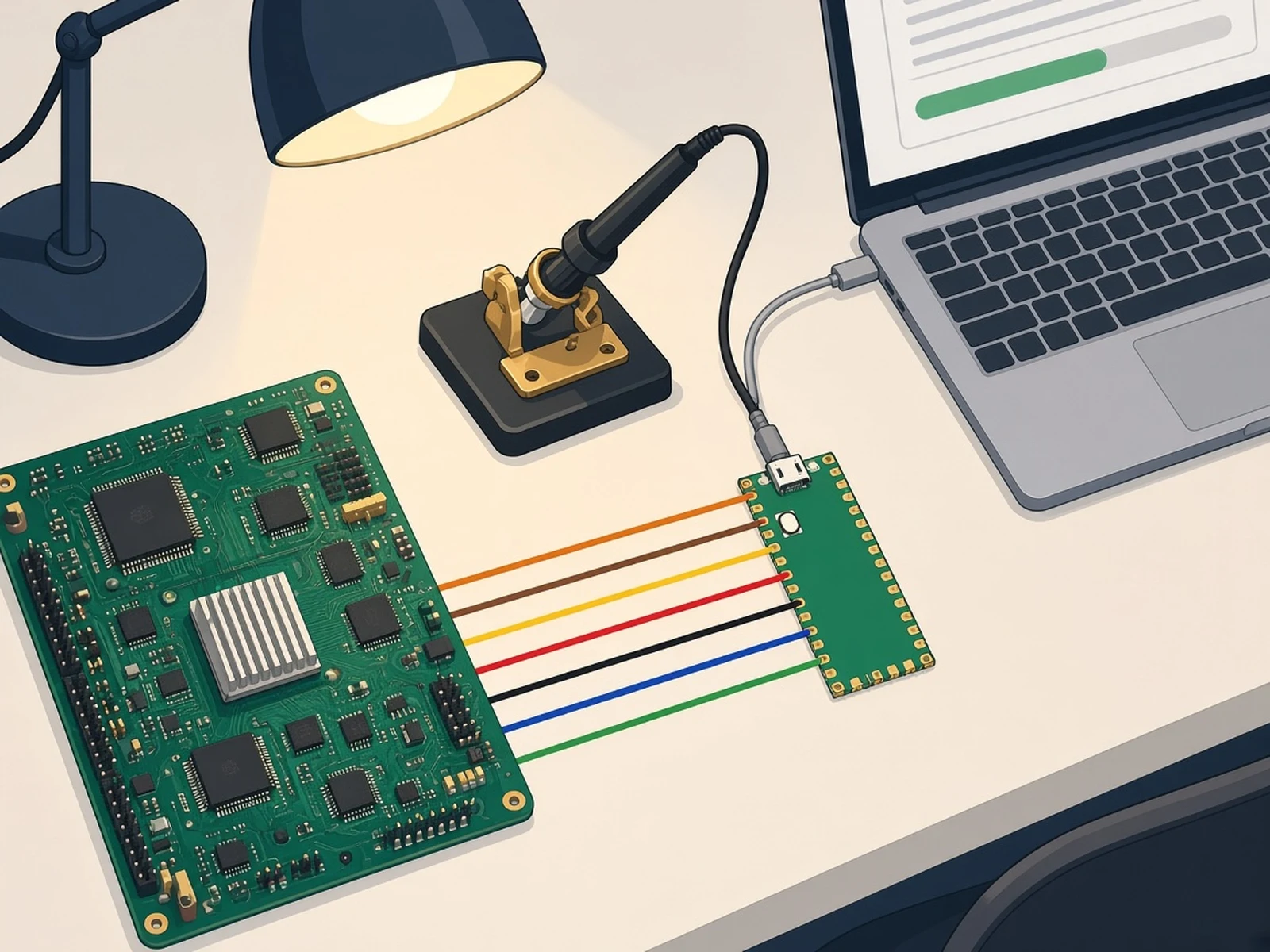
PicoFlasher turns a Raspberry Pi Pico into an Xbox 360 NAND flasher for J-Runner: flash the Pico, wire it, and read, write and verify the NAND step by step.
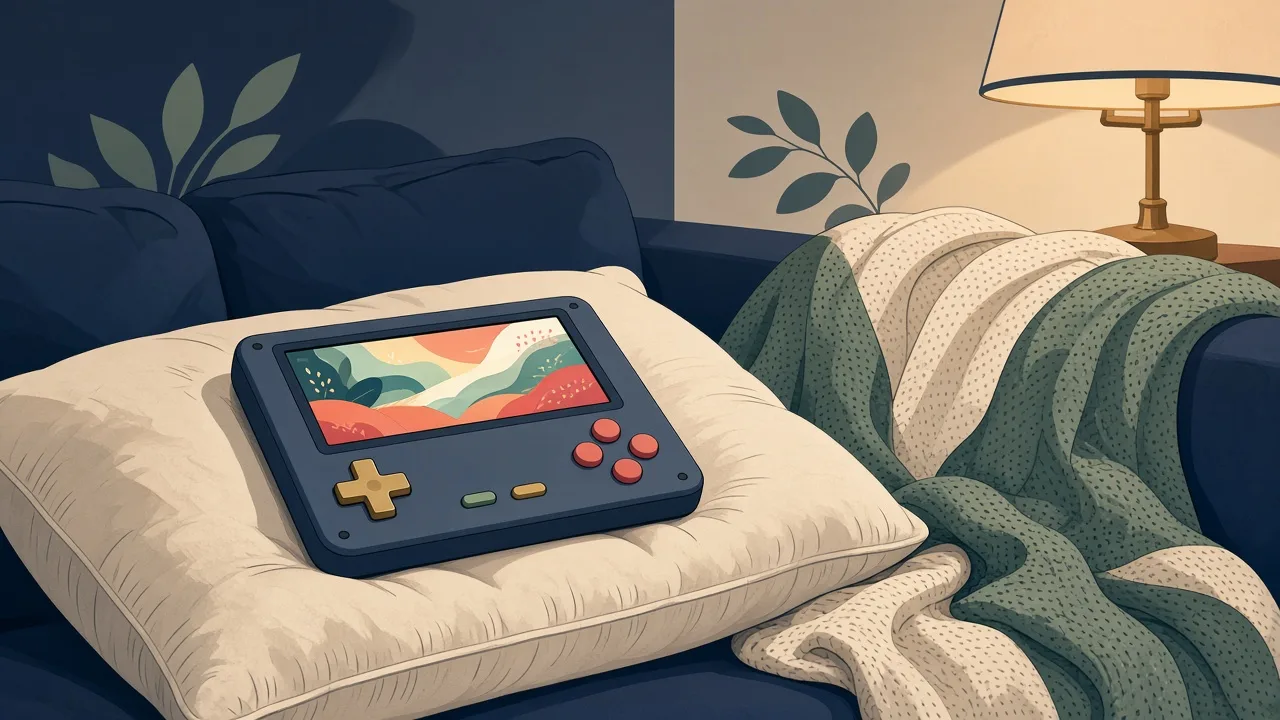
A pocket game console on the Raspberry Pi Pico: a 3.2in ILI9341 touchscreen and 23 built-in games — Pac-Man, Frogger, Asteroids — in a 3D-printed handheld.
OpenMower turns an off-the-shelf robotic lawn mower into an RTK GPS-accurate, map-based mowing robot with open-source software — the full upgrade path is documented.
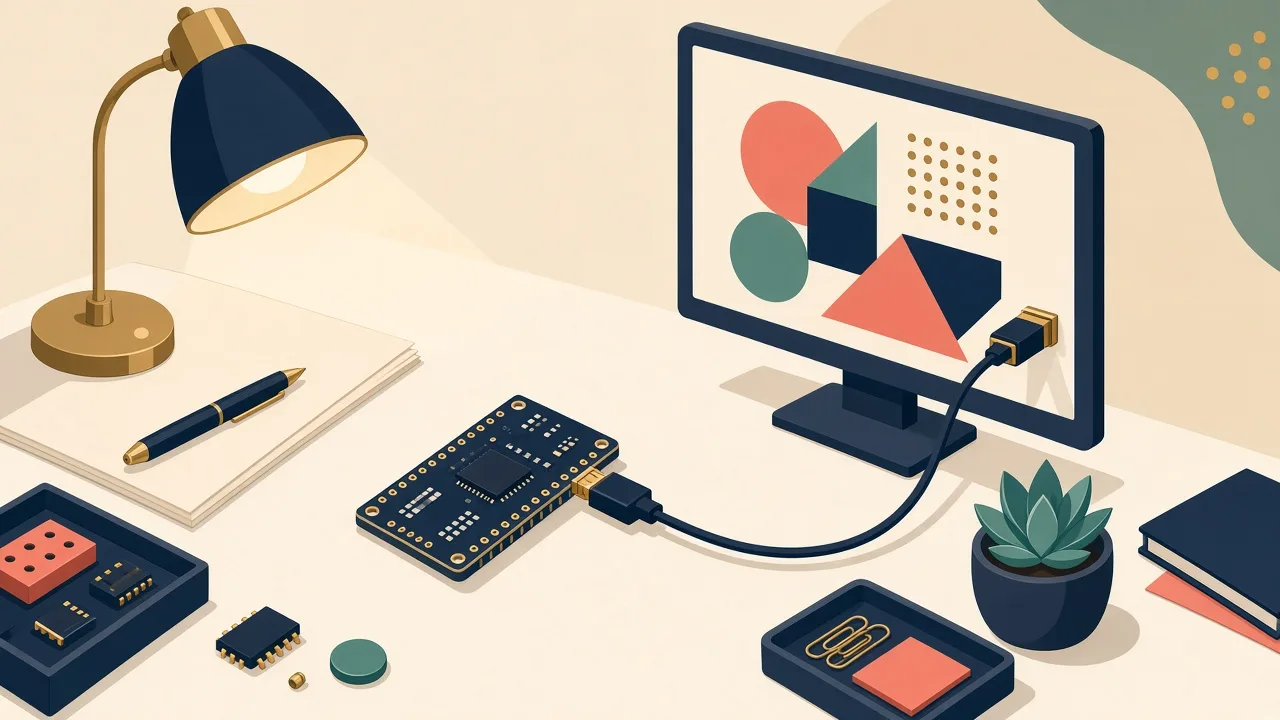
PicoDVI drives DVI/HDMI video straight out of a Raspberry Pi Pico — no video chip, just PIO pins and clever code. Three beginner routes compared; pick yours.
The Raspberry Pi Debug Probe is a CMSIS-DAP SWD debugger for ARM chips: flash and debug a Pico, STM32 or nRF52 from your PC. Setup, parts list and where to buy.
Macropad Hotkeys II is extensible CircuitPython firmware for the Adafruit MacroPad, with ready-made profiles for Blender, DaVinci Resolve, MIDI and more.
Beginner·Code
1 part listed
Where to Buy
Stores we've checked for this part
🔌Heads up: some Buy links are affiliate links. If you buy through one, MCU Atlas may earn a small commission at no extra cost to you. It never changes which parts we list. How this works