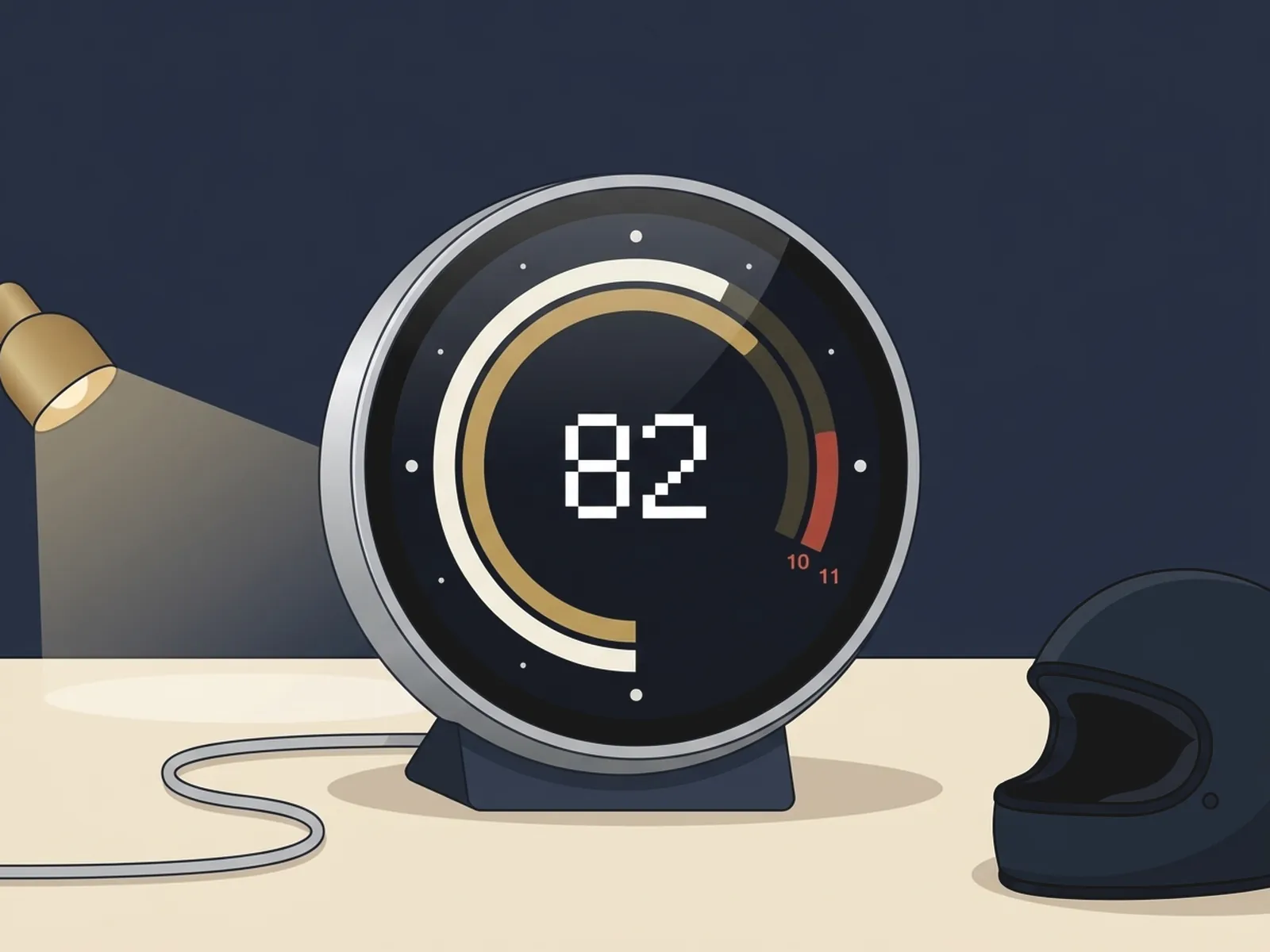
MOTO GPS: round-screen motorcycle navigation on a Waveshare ESP32-S3
A round Waveshare AMOLED screen becomes a motorcycle navigation display: your iPhone does the GPS and routing, and sends the next turn over Bluetooth LE.
What it is
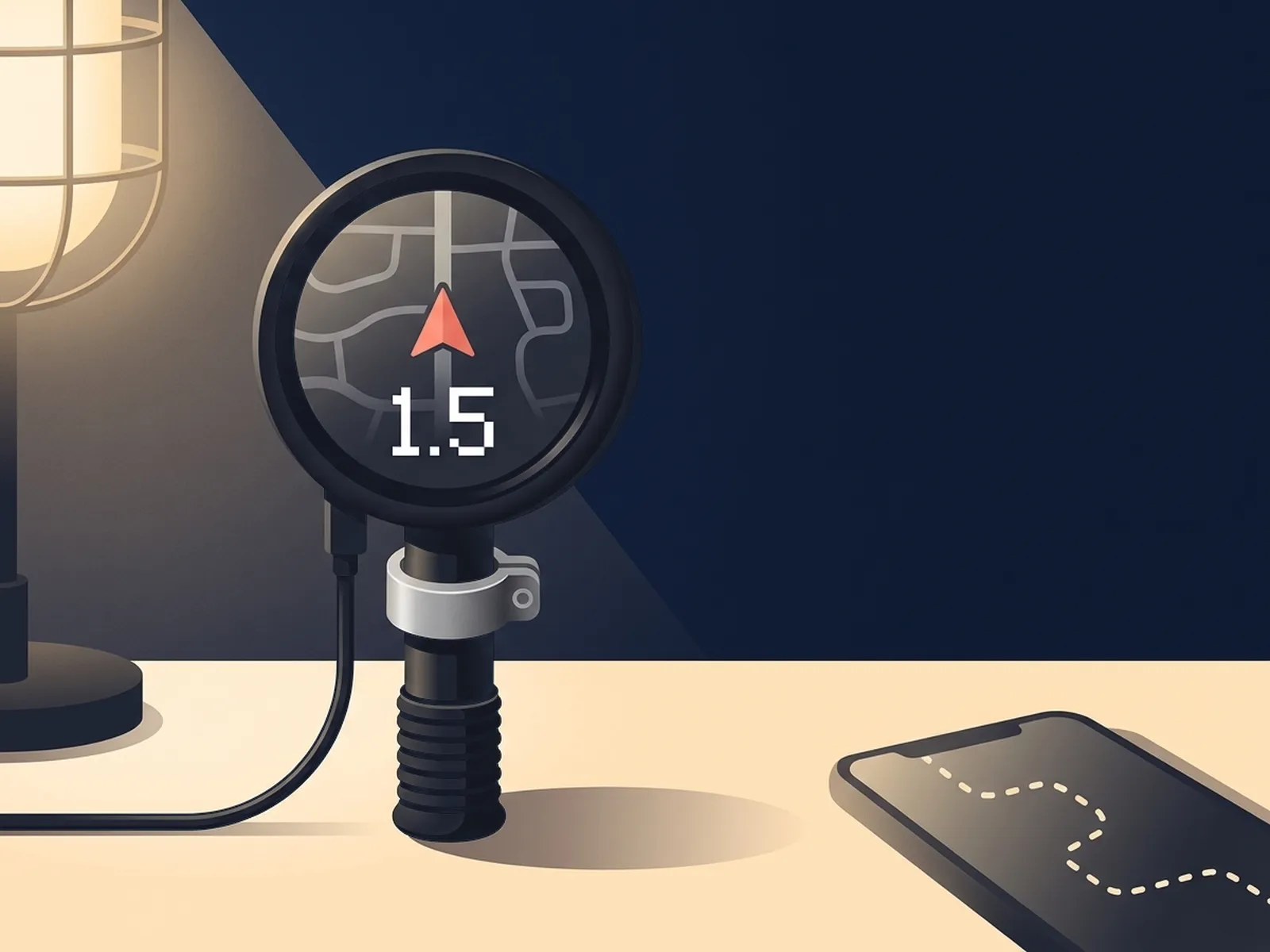
A DIY motorcycle navigation terminal by Maler X that splits the job in two: the rider's iPhone (in a bag or pocket) does GPS positioning, destination search and route calculation, and a round Waveshare AMOLED touch screen on the handlebar receives terse turn-by-turn guidance over Bluetooth Low Energy — next junction, turn action and countdown distance over a panning, rotating OpenStreetMap background, plus speedometer, compass and Apple Music pages.
What you need
- Waveshare ESP32-S3-Touch-AMOLED-1.75C the whole handlebar side: 1.75in 466×466 round AMOLED touch screen on an ESP32-S3 with 32 MB flash / 8 MB PSRAM, USB-C
- An iPhone running iOS 17 or newer runs the companion app you build and sign yourself — there is no App Store release
- USB-C data cable flashing the firmware and powering the board on the bench
How hard
Advanced (MCU Atlas editorial estimate): no prebuilt artifacts — you compile the ESP-IDF firmware, build and sign the iOS 17+ app yourself with Apple developer signing, self-host the route gateway (Node.js or a Cloudflare Worker) and bring your own AMap key. The stock board needs no soldering; the effort is all software.
Key Facts
- Round-screen motorcycle navigation project "MOTO GPS · Waveshare Edition" by Maler X — the rider's iPhone does GPS, destination search and route calculation, and sends turn-by-turn guidance to the handlebar display over Bluetooth Low Energy
- Built around the Waveshare ESP32-S3-Touch-AMOLED-1.75C (1.75in 466×466 round AMOLED touch screen, ESP32-S3, 32 MB flash / 8 MB PSRAM); firmware in C++ with LVGL 9.5.0 on ESP-IDF 5.5.5 + Waveshare BSP 3.0.0
- Four swipeable pages: navigation (next junction, turn action, countdown distance over grey OpenStreetMap context), big-number speedometer, compass/heading, and an Apple Music remote
- Source-available under PolyForm Noncommercial 1.0.0 (GitHub license field shows NOASSERTION — the LICENSE.md is the authority): personal study, research and noncommercial modification allowed; commercial use requires the author's separate authorization. Not open source
- Experimental prototype at the real-hardware verification stage, per the author — BLE reconnection, cross-city routing, frame-rate stability and battery life are ongoing work
- No prebuilt artifacts: you compile the firmware, build and sign the iOS 17+ app yourself (no App Store release), self-host the route gateway (Node.js or Cloudflare Workers), and bring your own AMap key
- Fast traction for a one-person project: 621 stars and 122 forks as of Nov 20, 2026 (repo created 2026-09-05)
- Independent MCU Atlas write-up: no code, firmware, text or images reused from the repo, maker credited; MCU Atlas has not built it on hardware — all facts verified from the project's own files via the GitHub API on 2026-11-20
About This Project
A round touch screen on your handlebars that shows a rider only what can be read at a glance: MOTO GPS puts the GPS, the destination search and the route calculation on your iPhone, and beams just the next turn to a Waveshare AMOLED puck over Bluetooth Low Energy.
What MOTO GPS is
MOTO GPS · Waveshare Edition is a DIY motorcycle navigation terminal by Maler X, built around one idea: split the navigation job in two. The rider's iPhone — in a bag or a pocket — handles GPS positioning, destination search and route calculation. A small round touch screen mounted on the handlebar receives terse turn-by-turn guidance over Bluetooth Low Energy and shows the road ahead. The complete route lives on the phone; the display only gets what the rider needs next.
On screen, the display shows the next junction, the turn action and the countdown distance, with grey OpenStreetMap roads and building outlines as context that pans and rotates under a fixed heading arrow. Swiping the round screen flips between four pages: navigation, a big-number speedometer, a compass and heading page, and a music page that remotely controls Apple Music (previous, play-pause, next).
What we verified vs what we didn't (our honesty split): repo state, license, hardware description and every fact on this page were checked against the project's own files via the GitHub API on 2026-11-20 (repo metadata, README, LICENSE.md and NOTICE, raw bytes saved). We have not built MOTO GPS on hardware — the flow and figures below are the project's documentation, not our bench results, and we've measured no performance numbers.
Before anything else: what the license allows
This page is an independent MCU Atlas write-up. We have reused no code, no firmware, no text and no images from the project — every word here is ours, and the maker is credited throughout and in the notice lines below.
The project is source-available, not open source: the repo's LICENSE.md is the PolyForm Noncommercial License 1.0.0 (GitHub's license field shows NOASSERTION — the file is the authority). In the author's own scope summary: personal study, research, noncommercial use and modification are allowed; selling preloaded devices, paid firmware distribution, or use in a commercial product or paid service needs separate commercial authorization from the author. Third-party code, fonts and OpenStreetMap data keep their own licenses. For a DIYer, the practical translation is simple: build it, learn from it, credit Maler X — don't sell it. The author self-describes the project as "source-available (public source, noncommercial licence)" — the README's byline reads "Author: Maler X · Attribution / noncommercial use · Experimental prototype" — and asks that redistributions carry the project's notice lines, which we reproduce for accuracy:
Required Notice: Copyright (c) 2026 Maler X (https://github.com/mx3353672833-debug). Required Notice: MOTO GPS - Waveshare Edition by Maler X. Source: https://github.com/mx3353672833-debug/moto-gps-waveshare
The hardware: one round Waveshare board
The whole handlebar side of the system is a single development board: the Waveshare ESP32-S3-Touch-AMOLED-1.75C — a 1.75-inch round AMOLED at 466×466 pixels with capacitive touch, built on the ESP32-S3 with 32 MB of flash and 8 MB of PSRAM. Around the display sit a CO5300 driver (QSPI), a CST9217 touch controller, a QMI8658 six-axis IMU that smooths the display while the bike turns, an AXP2101 power-management chip and USB-C. The round-display firmware is written in C++ with LVGL 9.5.0 (pinned to a specific commit), built on ESP-IDF 5.5.5 with Waveshare's BSP 3.0.0.
The repo also archives an in-house custom PCB — a 52 mm-diameter four-layer board combining an ESP32-S3, an LC76G GPS module and an IMU, marked DO NOT ORDER — and a V3 enclosure (61 mm diameter, 16 mm tall, in CAD/STEP/STL). Both are paused engineering candidates kept for reference; the current build is the stock Waveshare board, which is the one to buy.
The software: three pieces, and you build them all
On the phone side there's a native iPhone app (iOS 17 or newer, written in Swift with XcodeGen) that you build and sign yourself — there is no App Store or TestFlight release. Between phone and internet sits a self-hosted route gateway — Node.js or a Cloudflare Worker — that fronts AMap for place search, routing and traffic, and Protomaps/OpenStreetMap for the background map tiles. A browser-based WASM preview of the same LVGL UI lets you debug the interface on a desktop before touching hardware, and a demo mode simulates a ride between two Jinan landmarks so the whole thing can be tried at a desk. An Android app (Kotlin + Compose, sharing the same core) exists in the repo but is early and unverified on real phones.
What you're signing up for
There are no prebuilt artifacts: you compile and flash the firmware yourself, and live navigation requires your own AMap key, your own HTTPS gateway, and Apple developer signing for the iPhone app. That is the honest cost of a system with no downloads and no store listing — and it's also why it stays yours. The author marks MOTO GPS an experimental prototype at the real-hardware verification stage; the ongoing-work list includes BLE reconnection after screen lock, cross-city routing, frame-rate stability in fast turns, and battery-life testing. Route counts, recent-place limits, snapshot rates and map-cache sizes quoted in the README are the project's own figures, not our measurements.
A sibling build for the same handlebars
If this screen shape looks familiar, it may be because of our ESP32-S3 Touch OBD2 motorcycle dashboard (/projects/esp32-s3-touch-obd2-motorcycle-dashboard/) — a reader-favorite build that puts engine data on a 1.85-inch round Waveshare screen on your bars. MOTO GPS is the same "round touch LCD on your bars" idea with the opposite job: one reads your engine, the other reads the road. For a rider wiring up a bike anyway, the two pages make a natural pair — and both stay in the affordable-round-screen lane without sharing a single part requirement beyond the trope.
Where to go next
The repository (firmware, iPhone app, gateway, docs) is at https://github.com/mx3353672833-debug/moto-gps-waveshare — the maker's site is maler.top (the author's "Glimpse" project website; not open source) — and the license text is at https://polyformproject.org/licenses/noncommercial/1.0.0.
The parts list
The entire handlebar build is one board: the Waveshare ESP32-S3-Touch-AMOLED-1.75C — a 1.75-inch 466×466 round AMOLED touch screen with an ESP32-S3, 32 MB flash / 8 MB PSRAM and USB-C (linked to our catalog part below). Alongside it you need an iPhone running iOS 17 or newer — it runs the companion app you build and sign yourself, and no App Store release exists — and a USB-C data cable for flashing the firmware and powering the board on the bench.
No soldering is implied anywhere in the current build — the handlebar side is the stock board. (We claim nothing about mounting hardware: the repo's V3 enclosure CAD is a paused reference design, not a step in this build.)
Source & Attribution
Illustration
Bill of Materials
Parts list
3 parts · 0 linked
Heads up: some Buy links are affiliate links. If you buy through one, MCU Atlas may earn a small commission at no extra cost to you. It never changes which parts we list. How this works
1× An iPhone running iOS 17 or newer
1× USB-C data cable
Not included: No soldering anywhere in the current build — the handlebar side is the stock board, Nothing claimed about mounting hardware: the repo's V3 enclosure CAD is a paused reference design, not a step in this build, The repo's DO-NOT-ORDER custom PCB (Ø52 mm, ESP32-S3 + LC76G GPS + IMU) is an archived engineering reference, not a part to buy, Prerequisites, not parts: an ESP-IDF toolchain, Xcode + Apple developer signing for the iOS app, your own AMap key and an HTTPS route gateway
Learn
Docs & guides
Read these before you buy. These pages explain things; they don't sell anything.
- Project repository (firmware, iPhone app, gateway, docs)mx3353672833-debug/moto-gps-waveshare — MOTO GPS · Waveshare Edition by Maler XDocs
- Maker's site: maler.top (“Glimpse”)The author's “Glimpse” project website; not open sourceDocs
- The license text: PolyForm Noncommercial 1.0.0The license the repo's LICENSE.md carries: personal study, research and noncommercial use; commercial use needs the author's separate authorizationDocs
Related Projects