RIG-TARS: a desk robot you can talk to
A 3D-printed ESP32-S3 desk robot from LuwuDynamics: the wake word runs on the microcontroller, the brain runs in the cloud. What's local, what isn't.
What it is
A 3D-printed ESP32-S3 desk robot from LuwuDynamics: the wake word runs on the microcontroller, the brain runs in the cloud. What's local, what isn't.
What you need
- RIG-TARS electronics kit electronics only — current price in the Parts list below; the shell prints separately
- 3D printer + filament the body prints from the mechanical design files in the repository
- Cloud API key + Wi-Fi for speech recognition, speech synthesis and the LLM chat — the wake word itself is offline
How hard
Not a first project: ESP-IDF C++ toolchain, a 3D-printed body and cloud-service setup. An inspiring second-or-third ESP32-S3 build that touches voice, motion and AI agents in one repo.
Photos
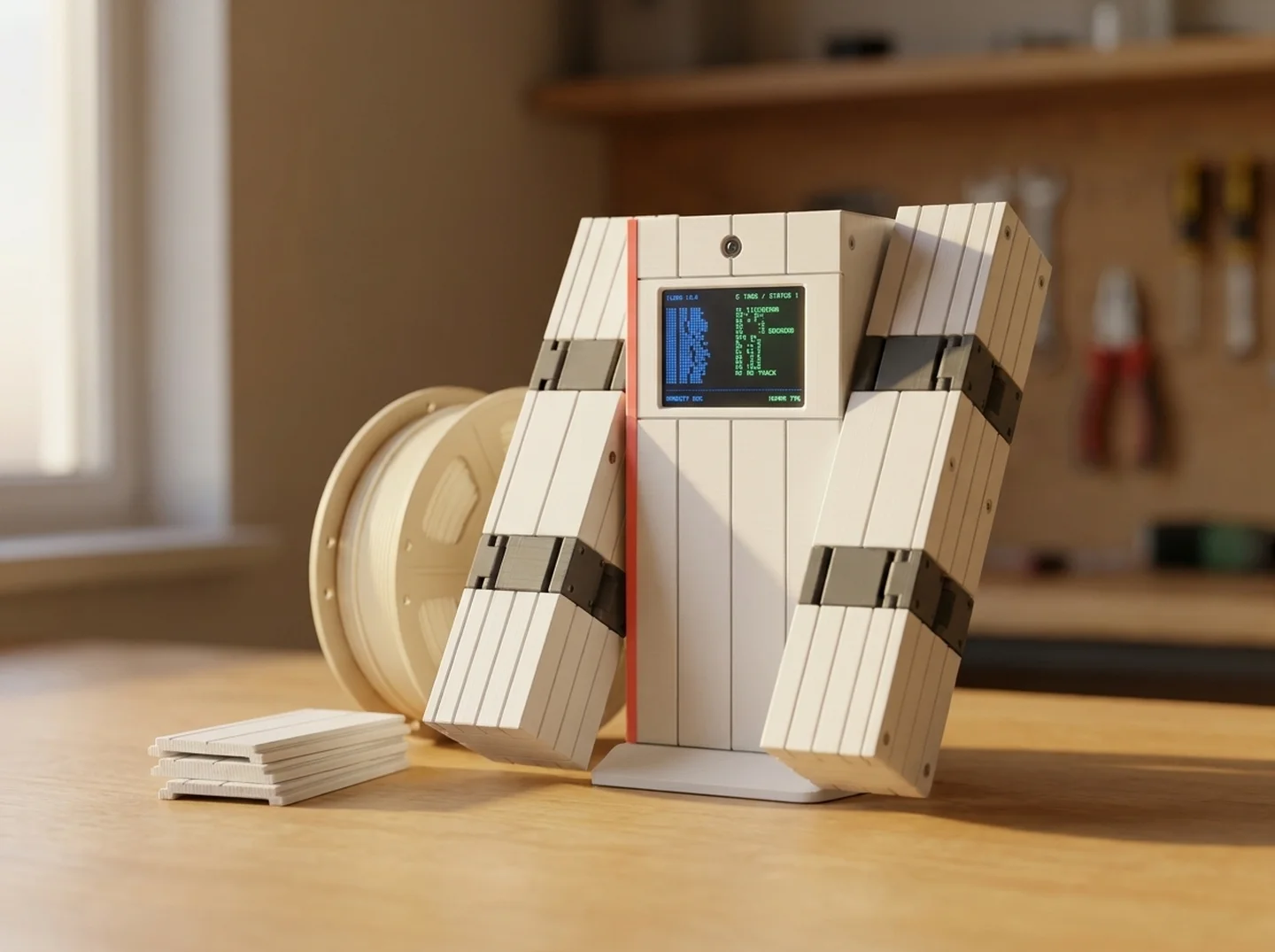
Photos: MCU Atlas (concept illustration)
Key Facts
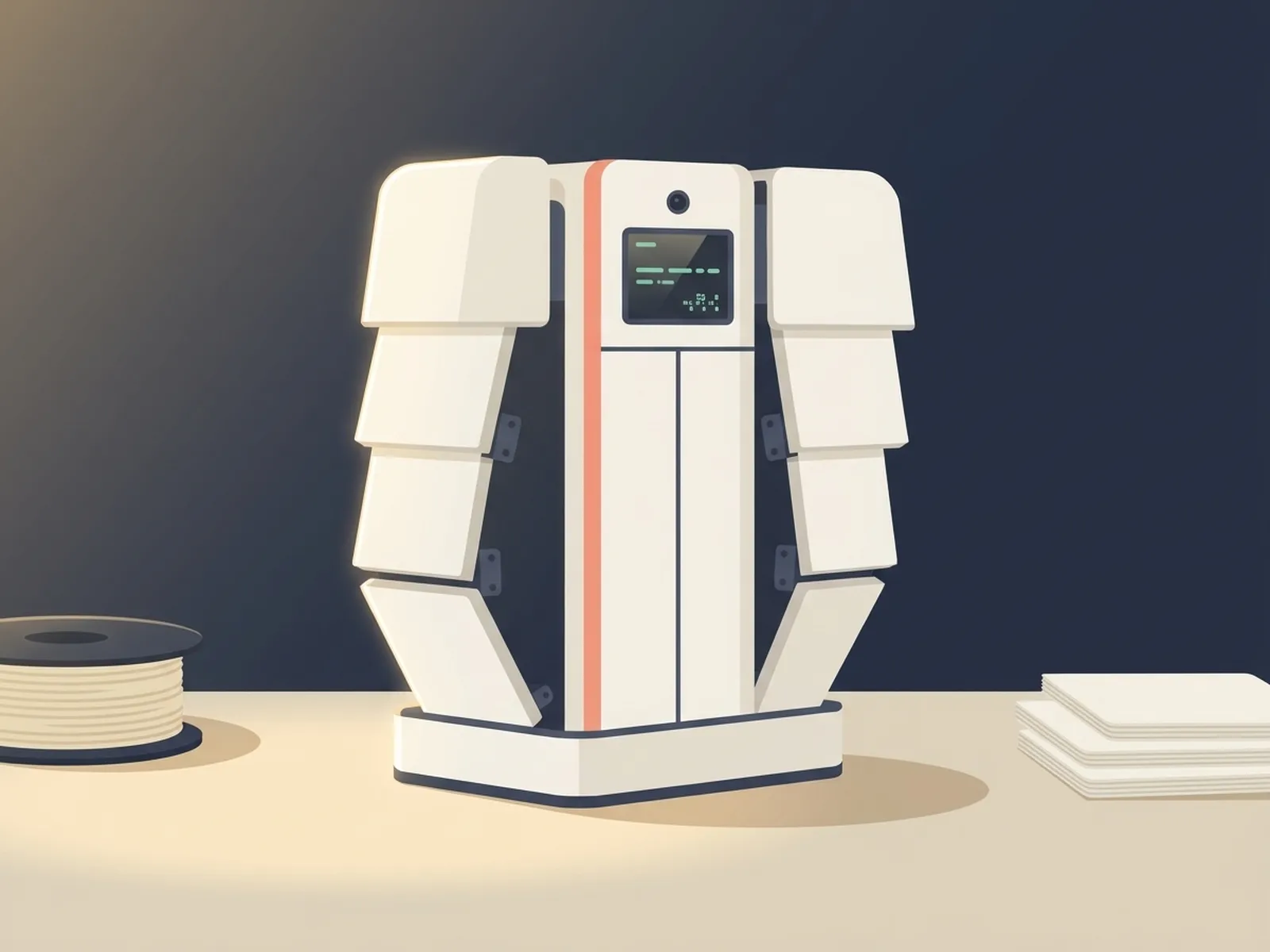
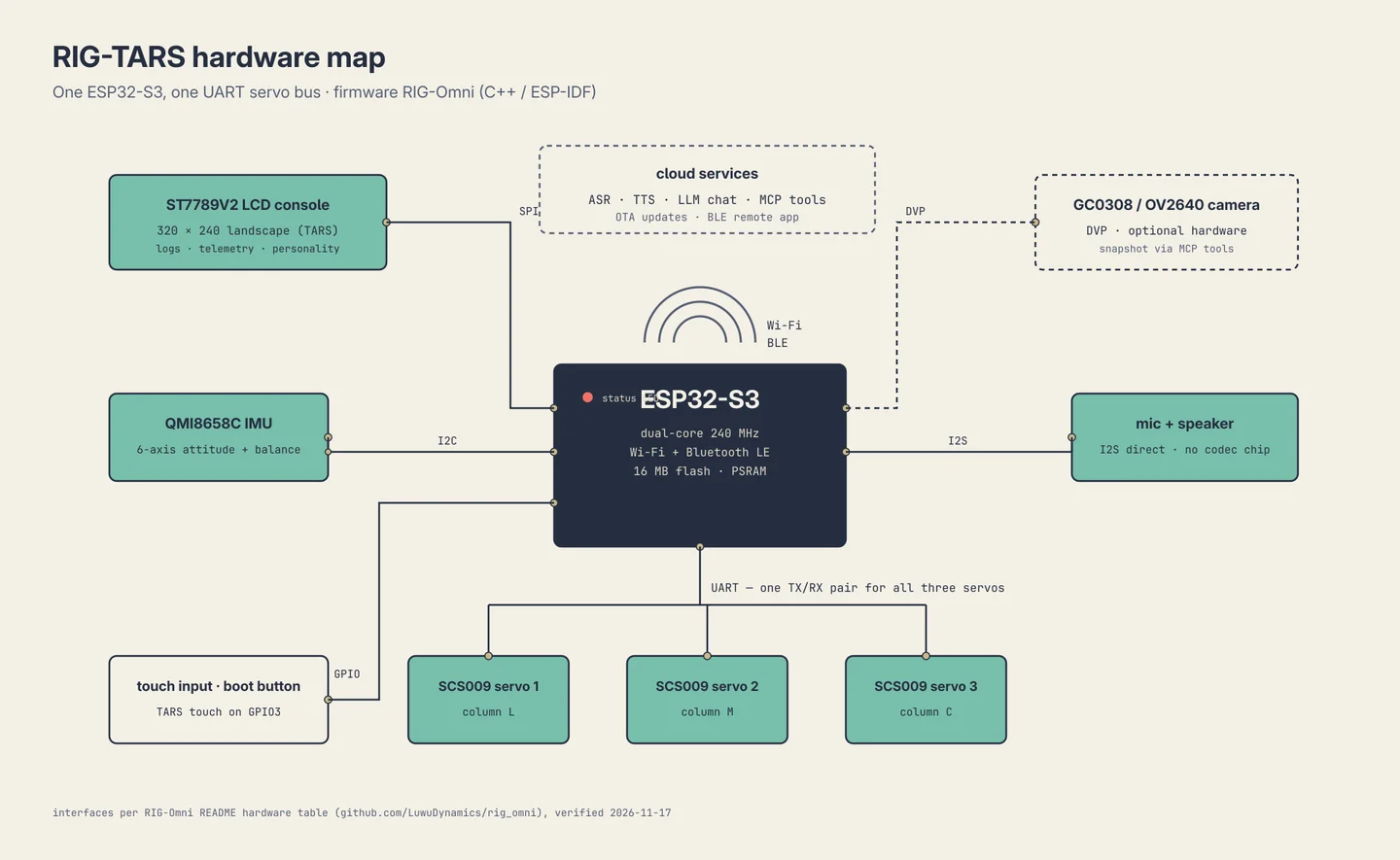
- 3D-printable desktop robot from LuwuDynamics built around the ESP32-S3, styled after the TARS robot in Interstellar: three SCS009 serial servos on a single UART bus, a six-axis QMI8658C IMU for posture and balance, mic and speaker over I2S with no codec chip
- The voice split, stated plainly: the wake word is detected offline on the ESP32-S3 itself; speech recognition, speech synthesis and the LLM chat features are cloud services that need a cloud API key plus Wi-Fi
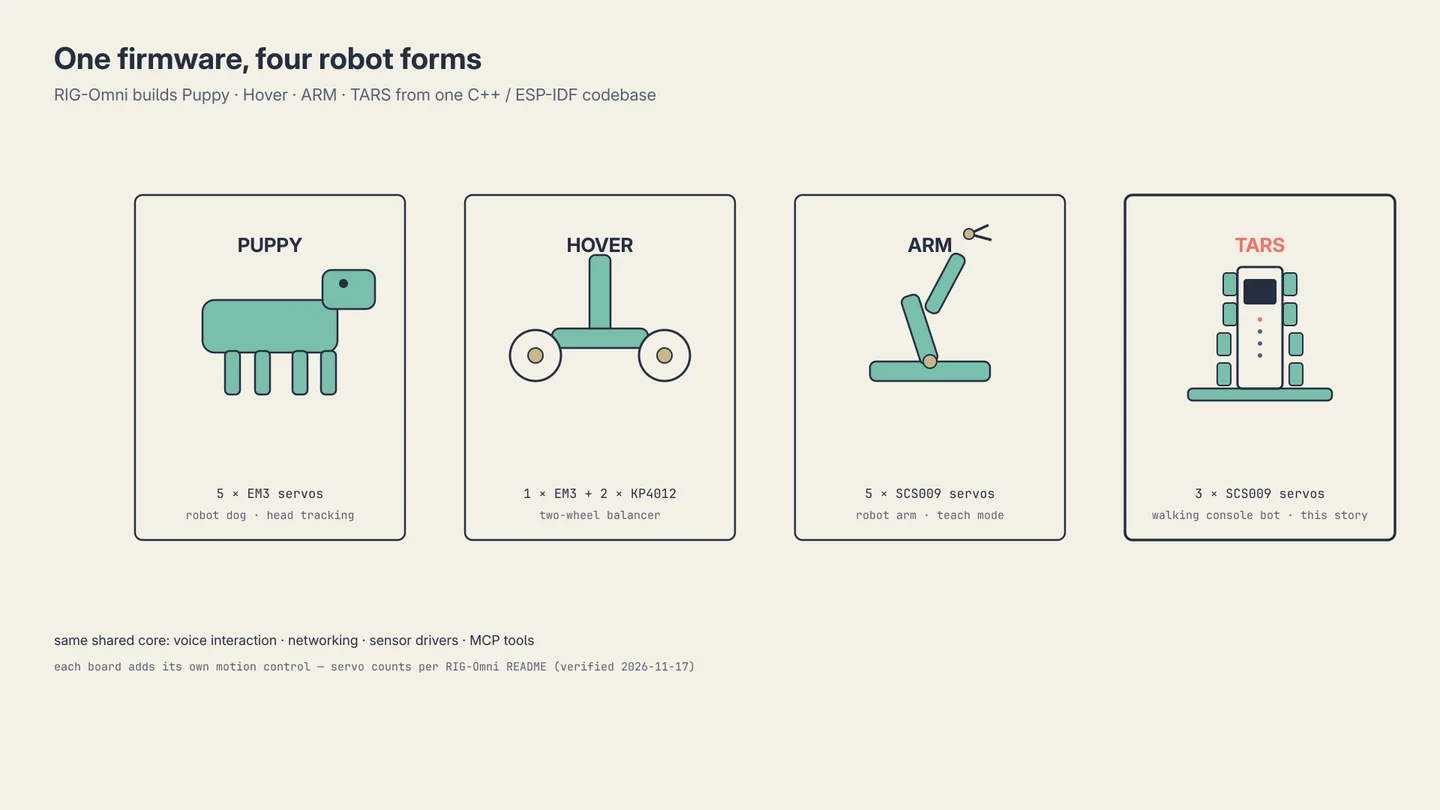
- Firmware (RIG-Omni) is C++ on ESP-IDF 5.5.x — not Arduino, not ESPHome — and one codebase builds four robot forms: the TARS three-servo walker, a five-servo arm, a two-wheel balancer and a robot dog, chosen at build time via Kconfig
- The kit is $99 for electronics only (checked 2026-11-17, three independent sources: OSFY, Adafruit, Circuitrocks); the shell prints yourself from the repo's mechanical design files — the kit price is the floor, not the total
- License: Apache 2.0 per the project README — no LICENSE file in the repository (verified 2026-11-17, re-checked 2026-11-28), so the licence is declared but not formalized
- MCP tools including camera snapshots on camera-equipped hardware (GC0308/OV2640), over-the-air firmware updates, and Bluetooth LE control compatible with the maker's remote app / mini program
- Not a first project: ESP-IDF C++ toolchain comfort, a 3D printer for the body, and cloud-service setup — an inspiring second-or-third ESP32-S3 build
About This Project
RIG-TARS is a 3D-printable desktop robot from LuwuDynamics, styled after the blocky walking machine in Interstellar, built around the ESP32-S3. It crossed our desk via the Adafruit blog on November 16, 2026, and the pitch is the kind makers respond to: a small articulated robot that listens, with the kit price in the Parts list below. But the headline number hides some fine print worth knowing before you fall for it. Here's what RIG-TARS actually does, what it needs the cloud for, and what its MCP support lets it do. MCU Atlas is not affiliated with LuwuDynamics.
The hardware: three servos, an IMU, a mic and a speaker
The robot is three articulated segments driven by three SCS009 serial servos on a single UART bus, with a six-axis QMI8658C IMU feeding posture and balance control. There's a microphone and speaker on board, with audio running over I2S and no separate codec chip. That's the whole bill of materials that makes it a robot: three servos, an IMU, a mic and a speaker, hung off an ESP32-S3. Keeping the servo bus serial — one TX/RX pair instead of a fistful of PWM channels — is a big part of why the design stays cheap and simple to wire.
The voice reality: the wake word is local, the brain is not
This is where "AI robot" oversells it, and where we'd rather be precise. The wake word is detected on the microcontroller itself — genuinely offline, on the ESP32-S3. Everything after that runs in the cloud: speech recognition and speech synthesis are cloud services, and the LLM chat features require a cloud API key plus Wi-Fi. Cut the network and RIG-TARS still hears its name — and not much else. That split is still an achievement on a microcontroller, but budget for the API key as an ongoing cost of the "talk to it" part, not just the kit price.
What MCP lets it do
The firmware supports MCP tools, including camera snapshots on camera-equipped hardware — meaning an AI agent on the other end can ask the robot for a photo of what it's looking at. Add over-the-air firmware updates and Bluetooth LE control (compatible with the maker's remote app / mini program), and the picture is a small robot designed to stay connected and update itself.
Four robots, one codebase
The quietly remarkable part isn't the walker — it's the firmware. RIG-Omni is C++ on ESP-IDF, and one codebase builds four different robot forms: the TARS three-servo walker, a five-servo robotic arm, a two-wheel balancing robot, and a robot dog. You choose the robot at build time via Kconfig, so the same project can grow (or shrink) with your interest.
The cost reality
The kit is electronics only (price checked 2026-11-17 — see the Parts list below): you print the shell yourself from the mechanical design files in the repository, so add filament and printer time. The LLM features then need that cloud API key and a stable connection. The kit price is the floor, not the total.
Who this is for
Not a first project. The firmware is ESP-IDF C++ — not Arduino, not ESPHome — so you'll want toolchain comfort, a 3D printer for the body, and an appetite for cloud-service setup. As an inspiring second-or-third ESP32-S3 build that touches voice, motion and AI agents in one repo, it's a great fit.
Licensing, in plain words
The project states Apache 2.0 in its README. As of November 17, 2026 there is no LICENSE file in the repository, so the license is declared but not yet formalized in the usual way — build on it, but note that caveat.
Getting started
Everything lives in one place: the RIG-Omni repository on GitHub, with the README as the authoritative guide (the project's separate docs site is out of date — trust the README). Firmware, mechanical files for printing, and the four robot configurations — the links are below.
What we verified, and what we didn't
We verified every spec and claim on this page against live sources on 2026-11-17 (the RIG-Omni README and repository state, plus the OSFY, Circuitrocks and Adafruit coverage) and re-checked the repository on 2026-11-28. What we did not do: build the robot, print the shell, or run a single voice command on it. Servo durability, battery and power details, print time and filament amount are not in any verified source, so this page makes no claims about them. The kit price is the maker's price as reported by three independent sources, dated when checked.
Source & Attribution
How to Build It
Parts Needed
- The RIG-TARS electronics kit from LuwuDynamics ($99 for electronics only, checked 2026-11-17 — see the Parts list; the shell is printed, not included)
- A 3D printer and filament for the body — the mechanical design files are in the repository
- A computer with the ESP-IDF 5.5.x toolchain set up (the firmware is C++ on ESP-IDF, not Arduino)
- A cloud API key for the speech and LLM features, plus Wi-Fi — only the wake word runs without them
Steps
- 1
Know what you're holding
The robot is three articulated segments driven by three SCS009 serial servos on a single UART bus — one TX/RX pair instead of a fistful of PWM channels, which is a big part of why the design stays cheap and simple to wire. A six-axis QMI8658C IMU feeds posture and balance control, and a microphone and speaker run over I2S with no separate codec chip, all hung off an ESP32-S3. Keeping the servo bus serial is what lets one small board be the whole robot.
- 2
Print the shell
The kit is electronics only: you print the body yourself from the mechanical design files in the RIG-Omni repository, so budget filament and printer time on top of the kit price. The README is the authoritative guide for everything — the project's separate docs site is out of date, so trust the README.
- 3
Build the firmware with ESP-IDF
The firmware, RIG-Omni, is C++ on ESP-IDF (the README's Quick Start uses ESP-IDF 5.5.x; TARS is verified with 5.5.3) — not Arduino, not ESPHome. Set the target to the ESP32-S3 and pick your robot at build time via Kconfig: the same codebase builds the TARS three-servo walker, a five-servo robotic arm, a two-wheel balancing robot and a robot dog, so the project can grow or shrink with your interest.
- 4
Wire up the voice — and know what's cloud
The wake word is detected on the microcontroller itself, genuinely offline. Everything after that is cloud: speech recognition and speech synthesis are cloud services, and the LLM chat features need a cloud API key plus Wi-Fi — cut the network and RIG-TARS still hears its name, and not much else. On top of the voice loop, the firmware supports MCP tools (including camera snapshots on camera-equipped hardware, GC0308/OV2640), over-the-air firmware updates, and Bluetooth LE control compatible with the maker's remote app / mini program. Budget for the API key as an ongoing cost of the talking part, not just the kit price.
Bill of Materials
Parts list
2 parts · 0 linked
Heads up: some Buy links are affiliate links. If you buy through one, MCU Atlas may earn a small commission at no extra cost to you. It never changes which parts we list. How this works
1× RIG-TARS electronics kit
Electronics only — $99 (checked 2026-11-17, the maker's kit price as reported by three independent sources: OSFY, Adafruit, Circuitrocks). The shell is NOT included: print it from the repo's mechanical design files.
1× 3D-printed shell (self-printed)
Not included: A cloud API key for speech recognition, speech synthesis and the LLM chat features — an ongoing cost on top of the kit, Filament and printer time for the printed shell, A camera (GC0308/OV2640) — only needed for MCP camera snapshots, on camera-equipped hardware
Learn
Docs & guides
Read these before you buy. These pages explain things; they don't sell anything.
- Source: LuwuDynamics/rig_omni (RIG-Omni firmware)The authoritative guide: README, mechanical files for printing, and the four robot configurations. The project's separate docs site is stale — trust the README.Docs
- OSFY: open-source ESP32 robot brings AI to the desktopCoverage of the kit pricing and the local-wake-word / cloud-brain split.Docs
- Circuitrocks: RIG-TARS, a $99 ESP32-S3 desk robotKit details and the cloud-API-key requirement for the LLM features.Docs
- Adafruit blog pickup (2026-11-16)The community pickup that brought RIG-TARS across our desk.Docs
Related Projects